Julia Mitchell
Raised in an artistic home, Julia Mitchell credits her aesthetic eye to childhood exposure to Japanese prints and textiles. Her weavings capture the natural world: how wind, water, light, and time interact to reveal the inner essence of environments. The creation process is physically demanding, requiring constant movement, yarn-mixing, and precision at the loom. Her tapestries serve as vital reminders of nature's fragility. She prioritizes making her art accessible to a broad audience, aiming to inspire inquiry and a sense of mystery.
Unlike many contemporaries, Mitchell uses linen, a medium with roots stretching to the third century B.C. Tapestry weaving peaked in medieval Europe, where gold-accented hangings adorned castle walls. As she notes, weaving remains inherently tied to human history, allowing these durable masterpieces to survive.
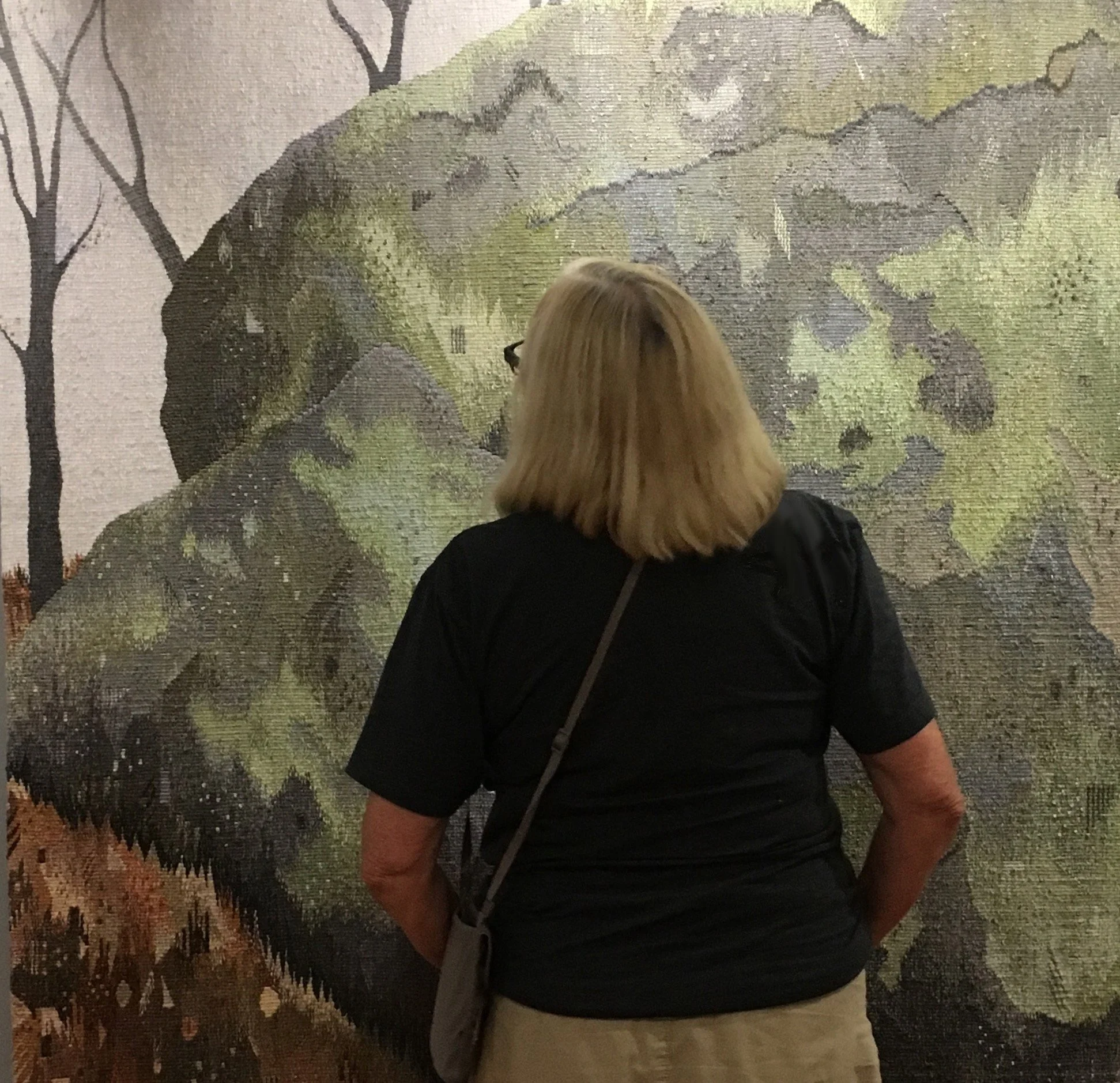
Julia Mitchell is currently accepting Commission requests and has an extensive portfolio of custom pieces, including scenic vistas, natural landscapes, and custom rugs. To learn more about this bespoke art process or to discuss your specific design vision, please scroll down or contact us today
Available Work
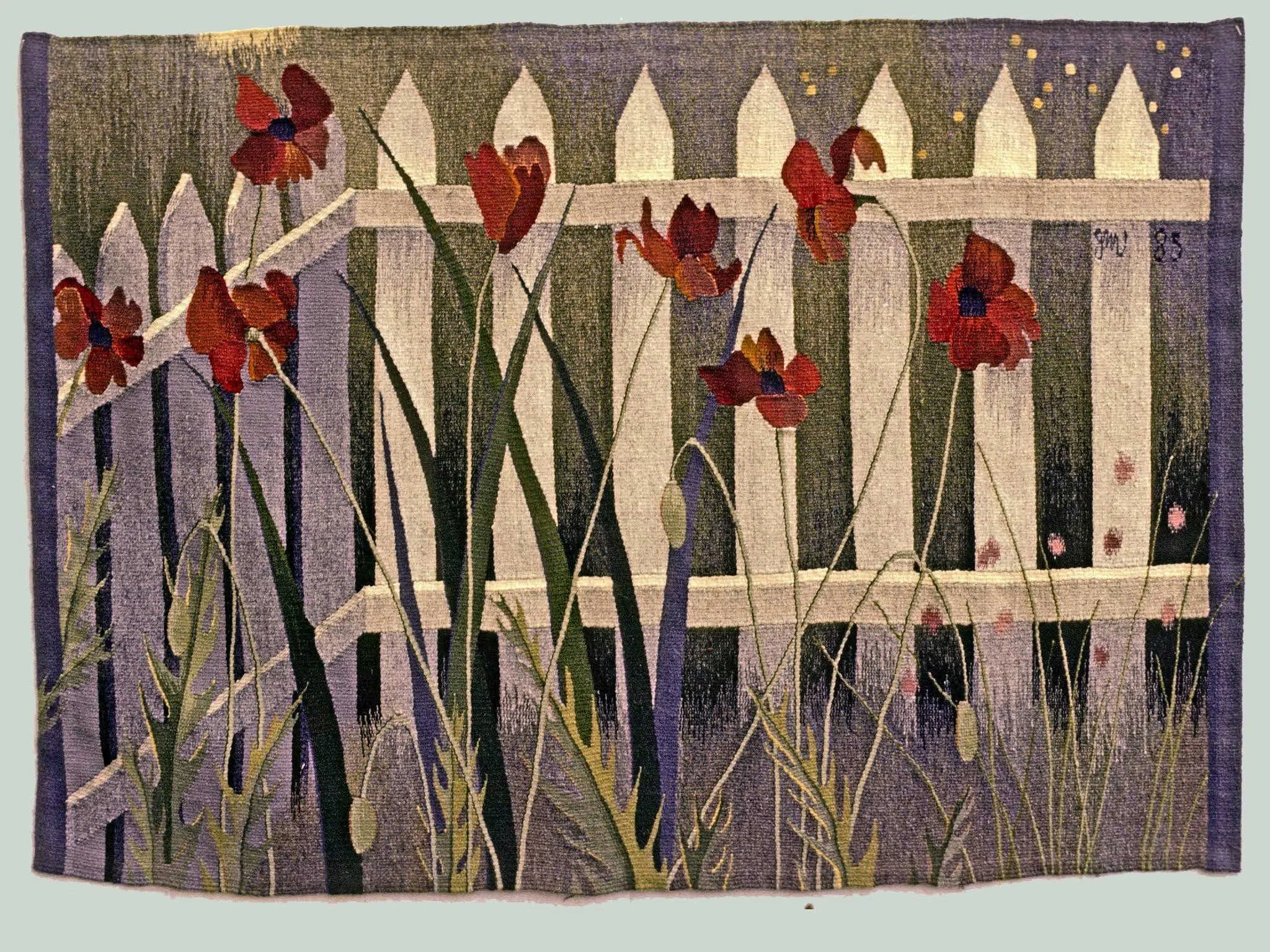
Front Garden • Tapestry: wool and silk on linen • 43 x 61 inches • $15,000
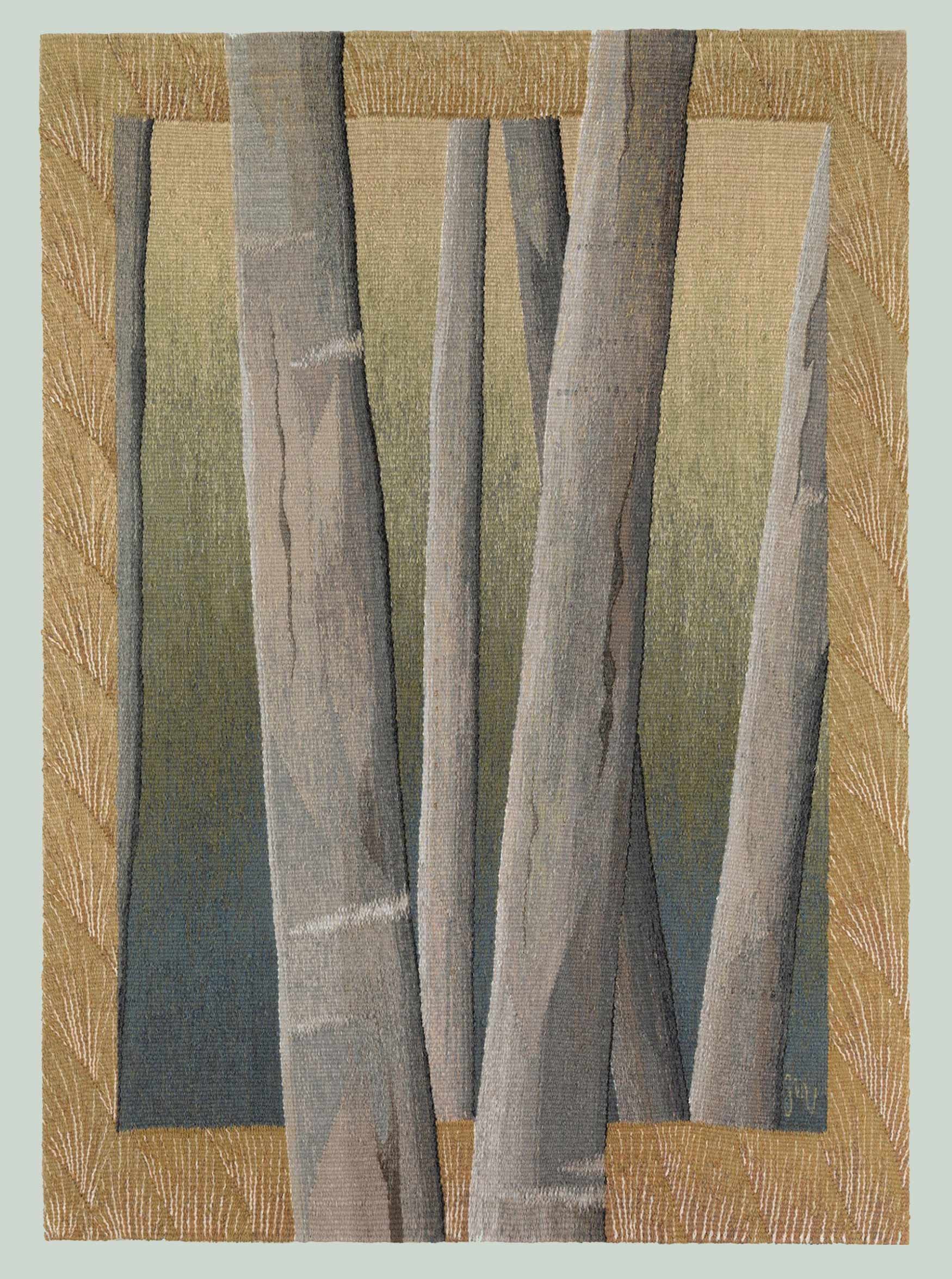
Tree Trunks With Orange Border • Tapestry: wool and silk on linen • 48 x 34 inches • $10,200
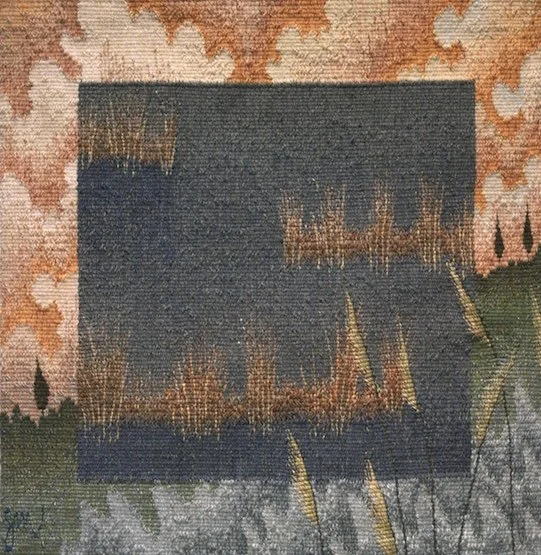
Hills of Grass II • Tapestry: wool and silk on linen • 24 x 24 inches • $3,400
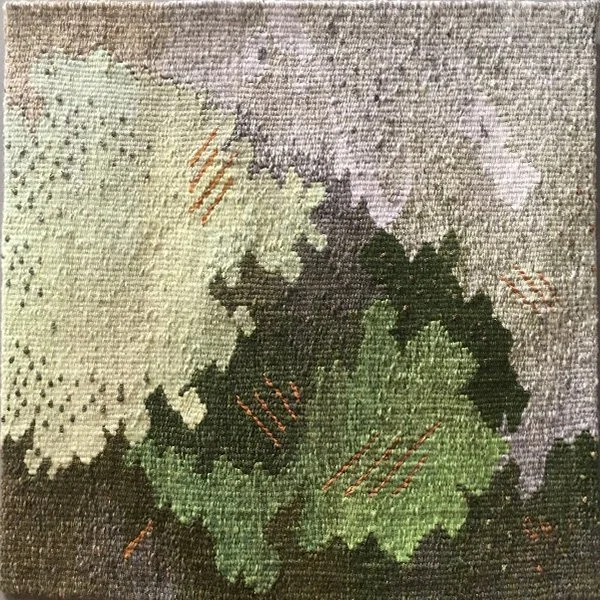
Grey-Green Lichen • Tapestry: wool and silk on linen • 18 x 18 inches • $1,900
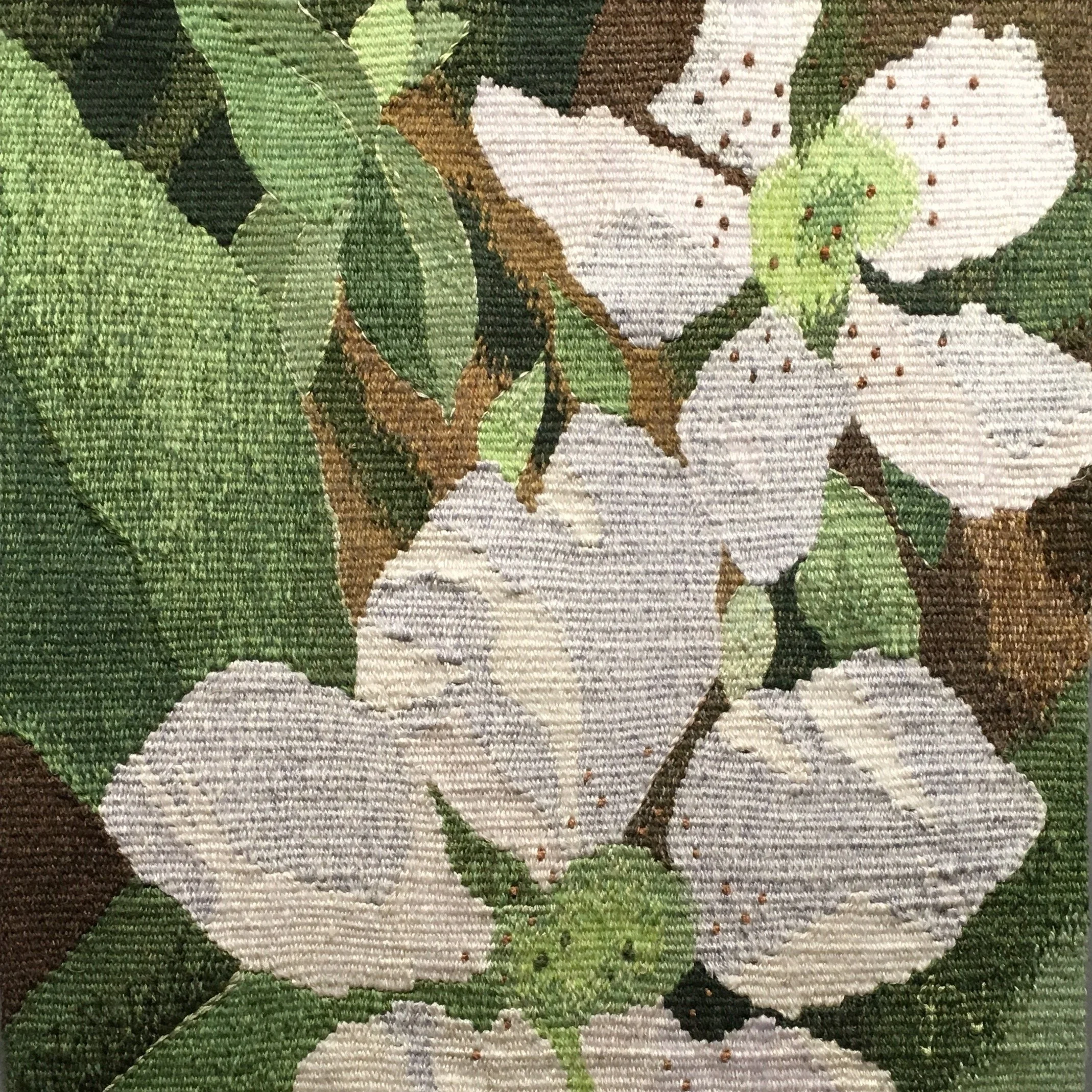
Wild Strawberries • Tapestry: wool and silk on linen • 18 x 18 inches • $1,900
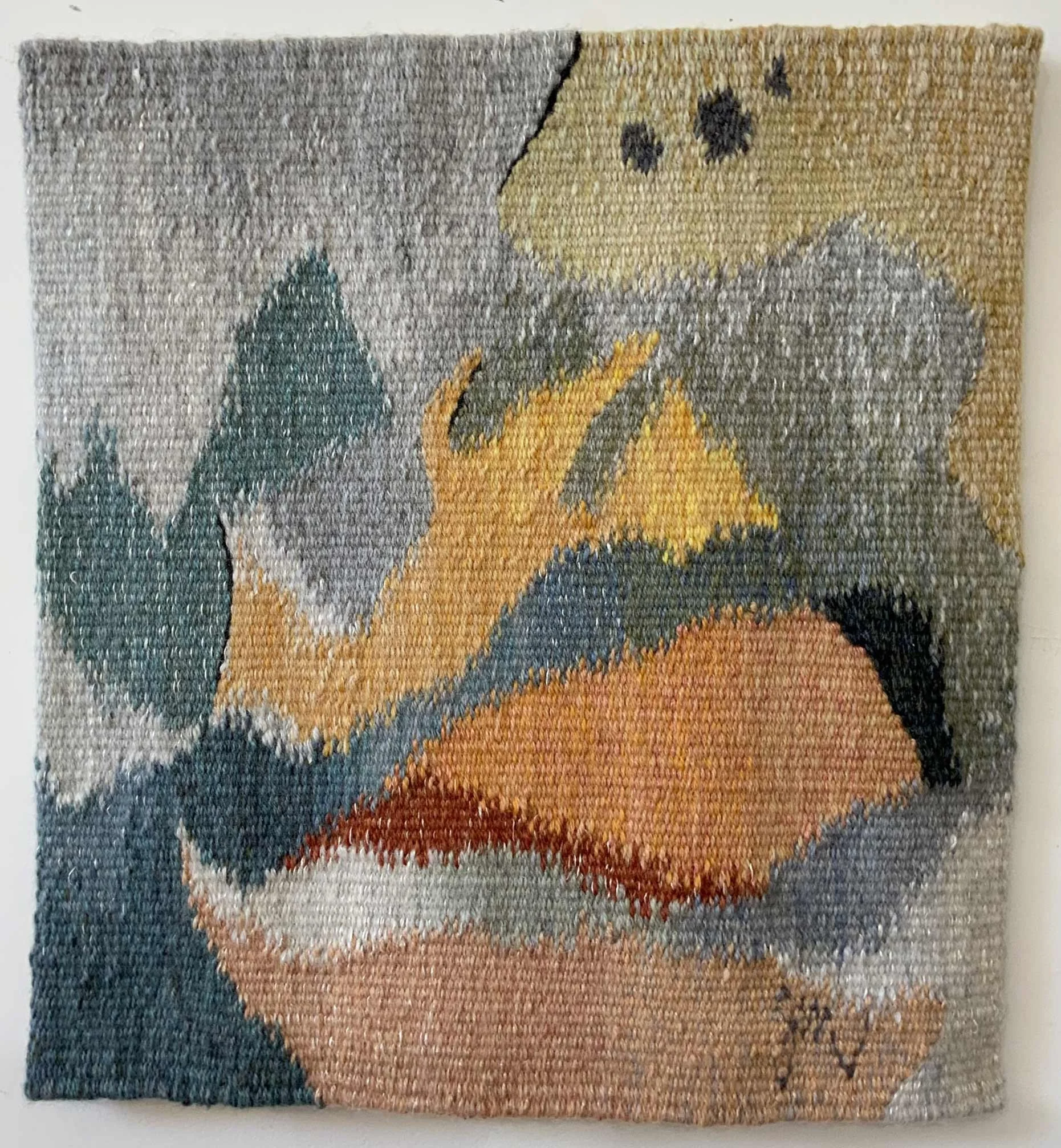
Small Abstract • Tapestry : wool and silk on linen • 16 x 16 inches • $1,500
The Tapestry Technique
A tapestry is constructed sequentially like a brick wall, meaning each element requires the support of previous rows. This structural constraint demands certainty from weavers to avoid undoing work, yet successful weaving relies on balancing strict planning with room for creative experimentation
The foundation consists of the warp, the lengthwise loom threads for which strong, durable Irish linen is ideal. Design patterns are built using the weft—horizontal threads woven through the warp. Much like painters using paint, weavers mix diverse wefts to manipulate colors and tones. A typical palette includes custom blends of Australian merino wool, Scottish tweed, Swedish wool, Japanese silk, and other inspired fibers.
Each unique masterpiece takes months to complete. Techniques constantly evolve to capture the illusion of movement, light, and shadow, sometimes changing fluidly within a single piece.
Commission
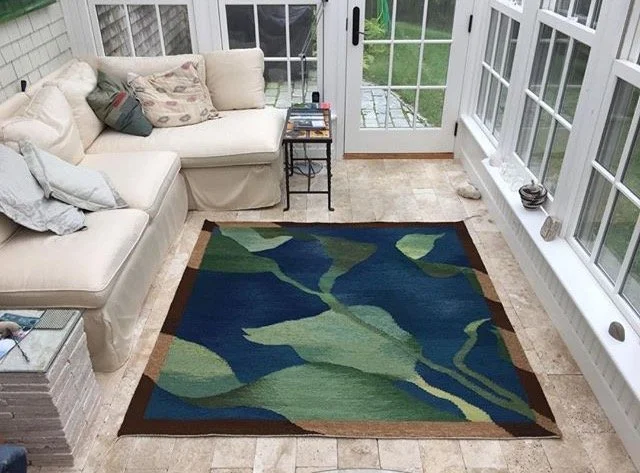
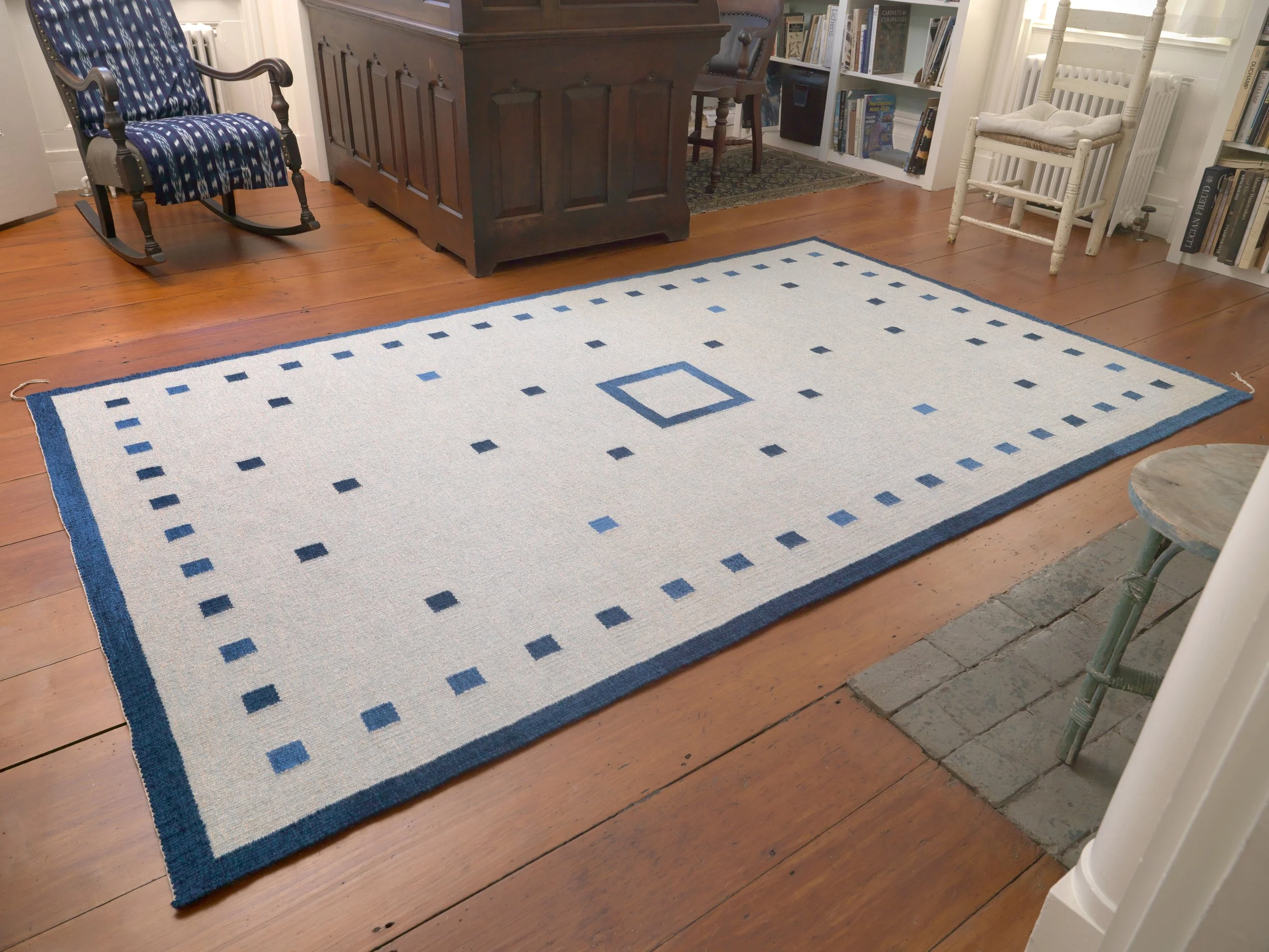
Each custom-woven tapestry is a made-to-order masterpiece that integrates the client's vision. The collaborative process begins by defining the piece's subject, dimensions, and setting through site visits or photos. Next, the artist drafts initial sketches, provides a colored drawing, and shares yarn samples for client review. Following adjustments, the weaving process begins, culminating in the delivery of a ready-to-hang artwork or unique rug.
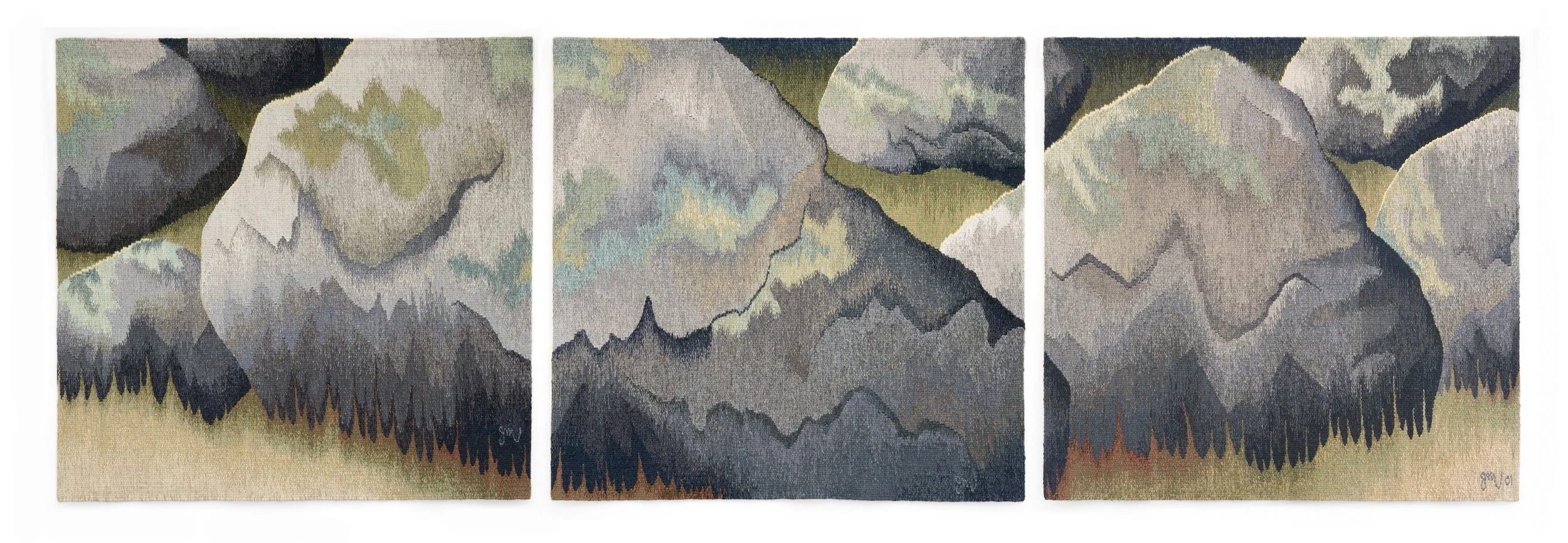
Rock Triptych (2001) • wool and linen tapestry • 36 × 114 inches
Located at Martha’s Vineyard Hospital, in the Permanent Art Collection (To view in person: Upstairs Exit to the Roof Garden)